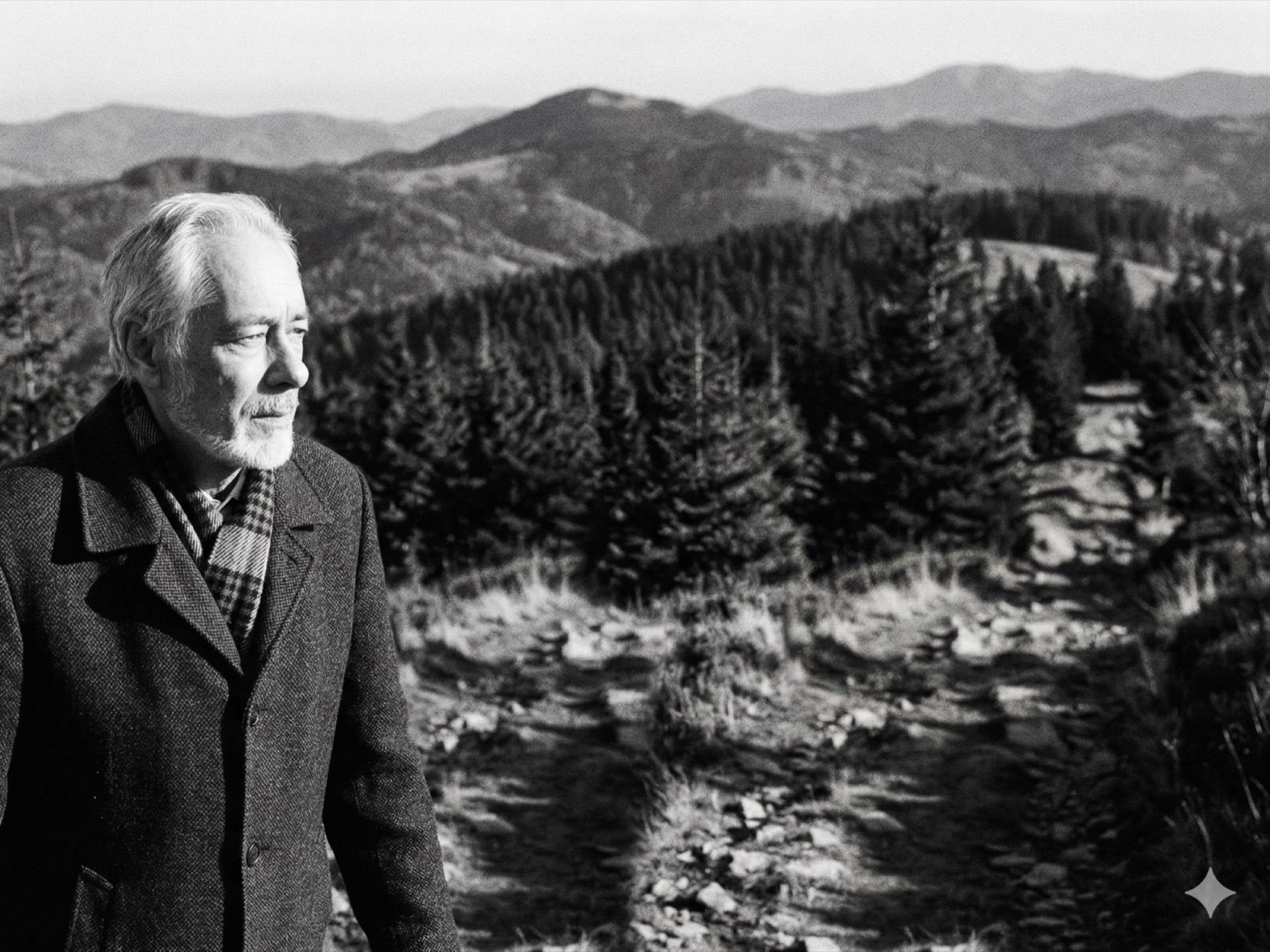
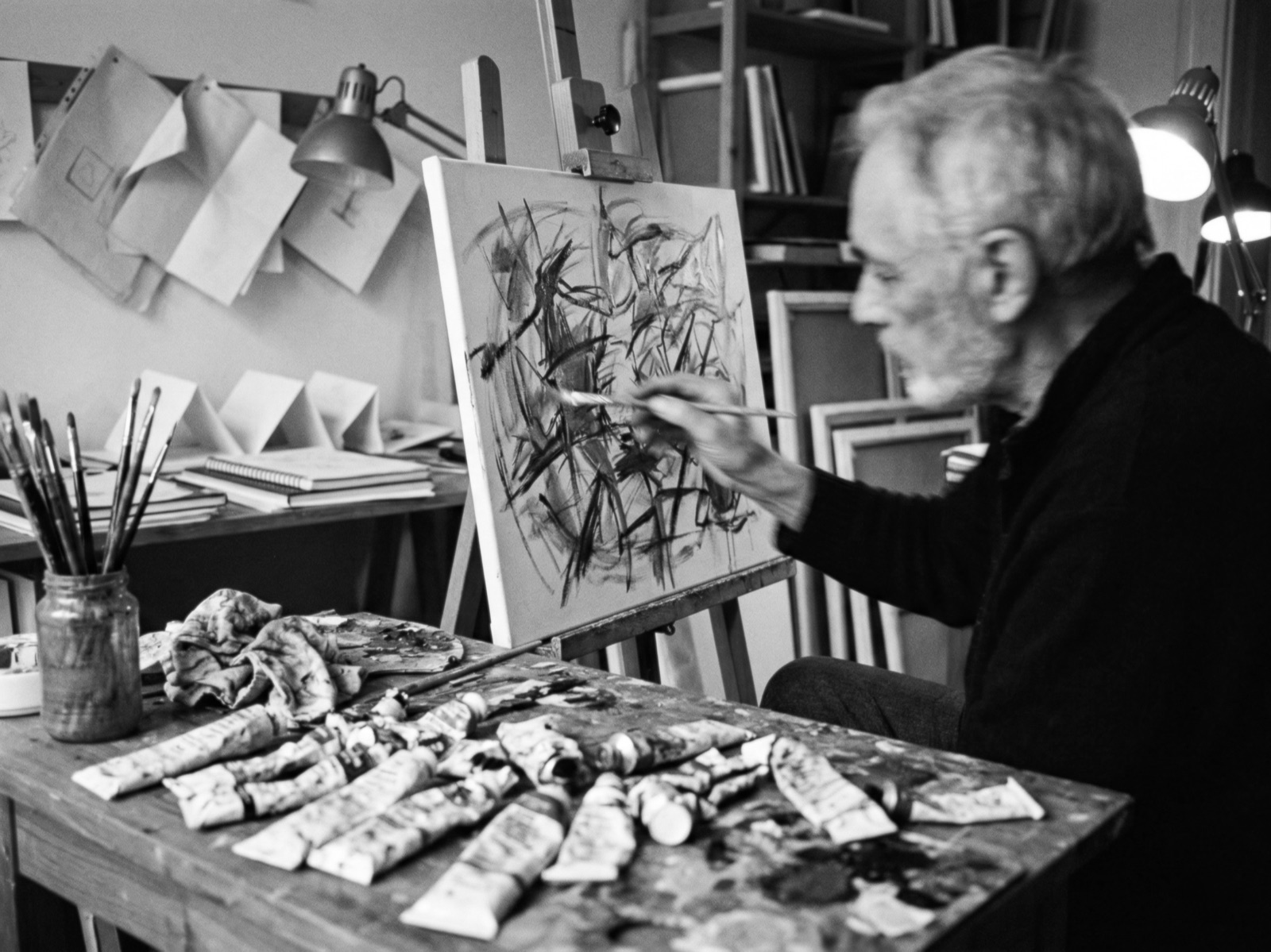
Born in Rabka-Zdrój in 1941, Głuszyński trained at the Jan Matejko
Academy of Fine Arts in Kraków under Professor Tadeusz Marczewski, before
transferring to industrial design — specialising in colour in public and
workplace environments, where hue shapes safety, mood and orientation.
Over six decades his practice moved through pen drawing and linocut,
religious portraiture, church conservation — including the portrait of
Saint Bishop Józef Sebastian Pelczar for a Kraków church visited by
Pope John Paul II — and finally into meditative late-career abstraction
in watercolour. He died in Kraków on 19 January 2018.
Selected Works
Oil, ink & watercolour
"
How colour and form act upon a person — how space can elevate or oppress.
Andrzej Głuszyński · 1941–2018
Get in Touch
Commissions & Inquiries
For inquiries about acquiring works, exhibition loans, press matters,
or simply to speak about the paintings — we welcome your message.
Thank you — your email app should open. If it does not, write to estate@gluszynski.art
Full biography
Andrzej Głuszyński (1941–2018)
Andrzej Głuszyński was born on 30 November 1941 in Rabka-Zdrój, a spa town in the Lesser Poland uplands, set in the valley between Kraków and Zakopane at the northern foothills of the Gorce Mountains. The landscape of his childhood — mineral springs, sanatorium architecture, dense forest, open highland pasture — would remain a lifelong reference point, both personally and pictorially. He returned there every year until the end of his life, and continued to ski the mountain trails of Turbacz well into later age. For Głuszyński, the mountains were not backdrop but discipline: a way of remaining attentive to the physical world.
Origins
He came from a family of considerable artistic distinction. His mother, Krystyna Głuszyńska née Hawliczek, was a concert pianist and founder of the music school in Rabka-Zdrój, an institution that shaped the cultural life of the town for decades. His father, Jan Głuszyński, held a professorship in double bass at the conservatoire in Katowice, and was a member of the Polish Home Army. He was killed at Auschwitz — Andrzej was still an infant. The absence defined something. The music that his mother kept alive in the household, and the history that could not be spoken around it, together formed the particular seriousness with which Głuszyński would approach his own work.
Formation
Głuszyński studied at the Jan Matejko Academy of Fine Arts in Kraków — Poland's oldest and most distinguished art institution, founded in 1818. He began on the painting faculty under Professor Tadeusz Marczewski, a painter and printmaker of considerable rigour whose practice encompassed religious, portrait and academic realist work. The training instilled in Głuszyński a fundamental discipline of observation that would underpin every subsequent turn in his practice. He later transferred to industrial design, specialising in the applied theory of colour in public and workplace environments — how chromatic decisions shape human orientation, wellbeing and productivity at scale. This was, in 1960s Poland, an uncommon specialisation: a field operating at the intersection of aesthetics, ergonomics and psychology, and Głuszyński was among its early practitioners.
Graphic work and early painting
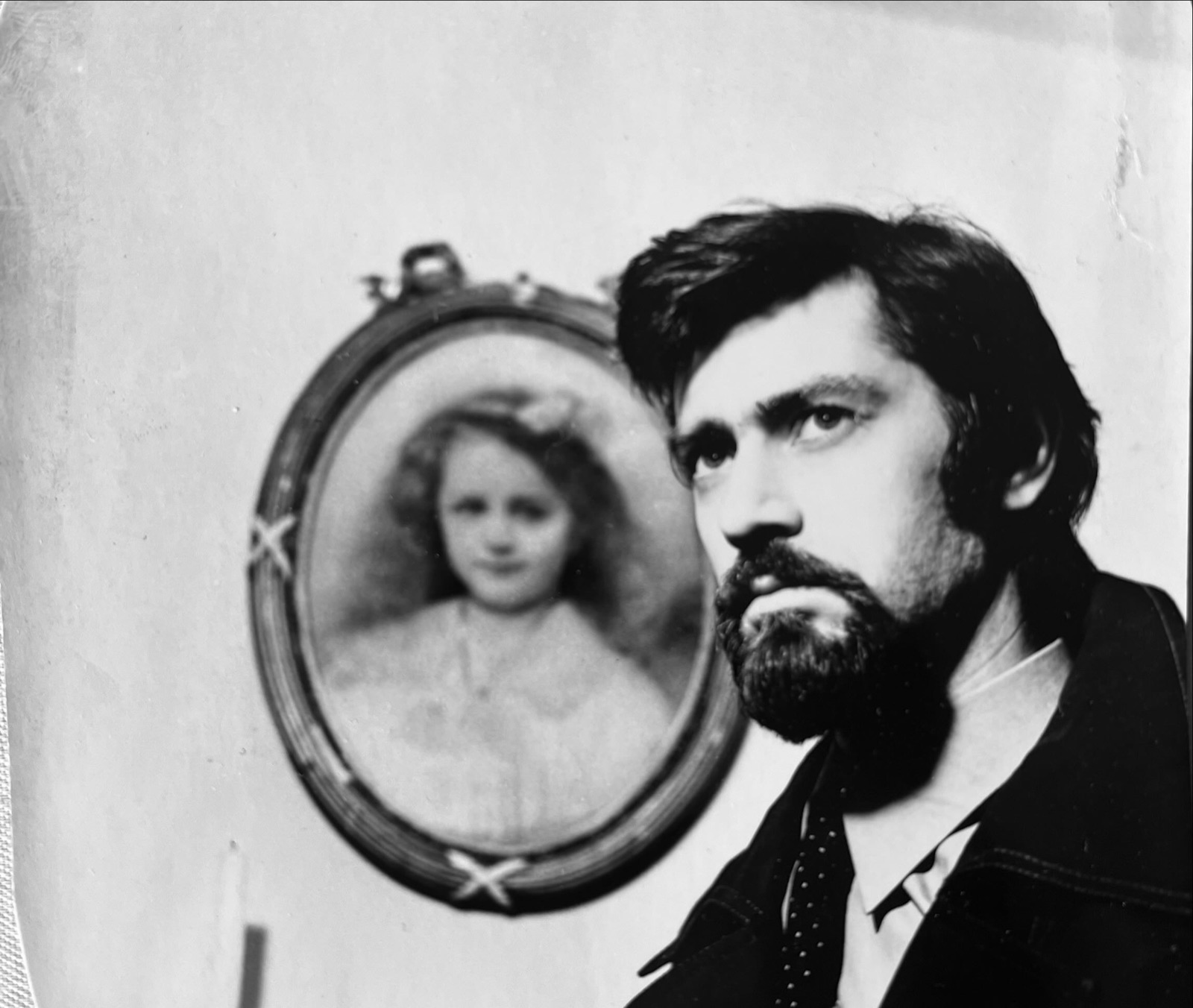
Throughout the 1960s and 1970s, Głuszyński worked across multiple registers simultaneously. His paintings of the period engaged with realism and surrealism — a generational preoccupation in Polish art as it absorbed, belatedly but with great intensity, the movements that had reshaped Western European practice since 1945. In parallel, he produced a substantial body of works on paper: finely articulated pen drawings and a significant output of printmaking, including linocuts, in which the discipline of reduction — the commitment to mark-making in black and white, without the mediation of colour — developed a visual intelligence distinct from his painting.
c. 1970 — graphic work and early painting period
Sacred commissions and conservation
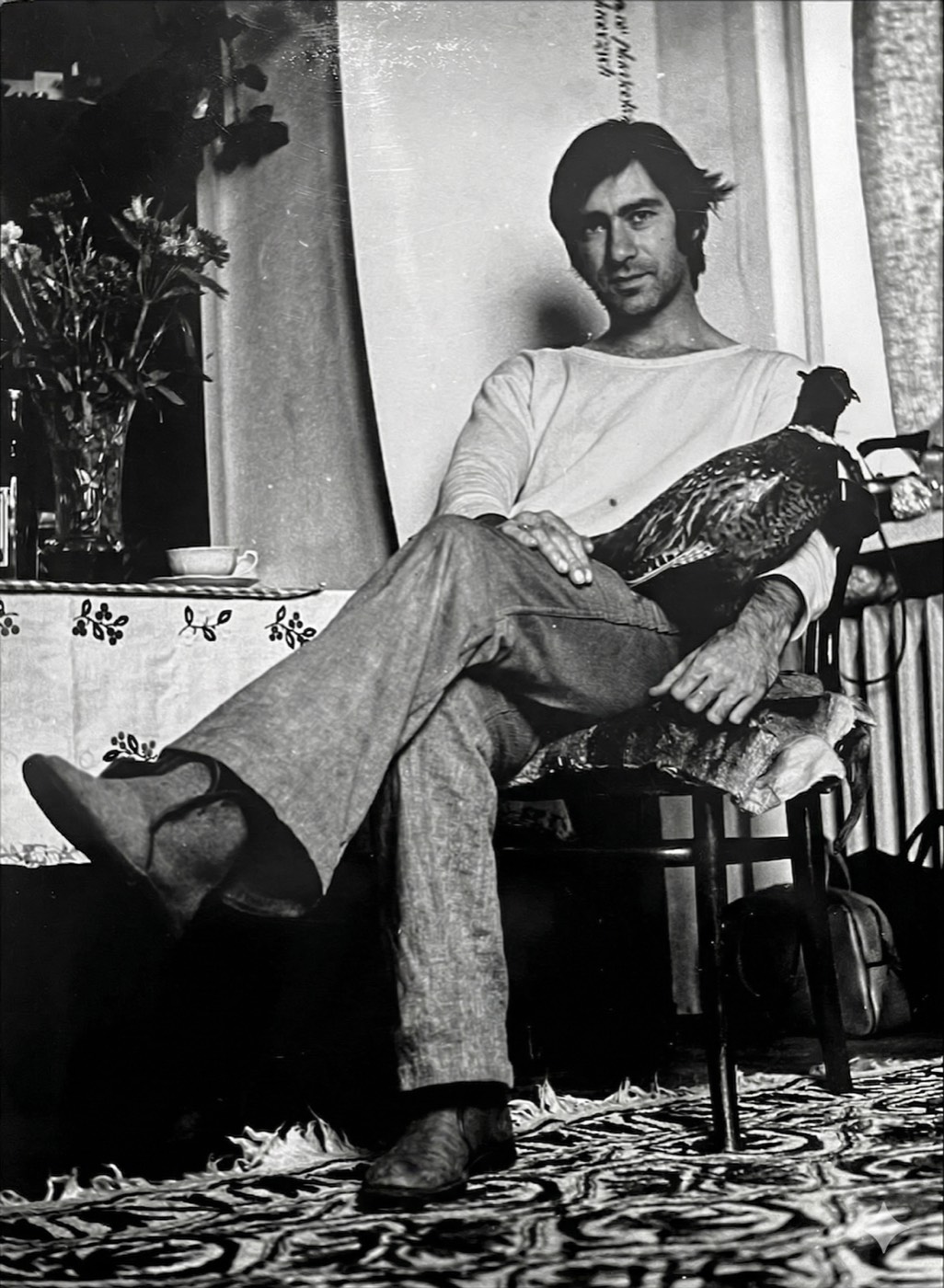
From the late 1970s through the 1990s, Głuszyński turned with increasing focus toward sacred art. In communist Poland, the Catholic church occupied a singular cultural position — a space of continuity and resistance in which artists who contributed to its visual programmes participated in something considerably larger than aesthetics. Głuszyński painted for several Kraków churches, producing portraits, figurative compositions and religious works of the period.
Among his most significant commissions is a portrait of Saint Józef Sebastian Pelczar, painted for the Church of the Sisters of the Sacred Heart of Jesus on ulica Garncarska in Kraków. Pelczar — theologian, rector of the Jagiellonian University, founder of the Congregation of the Servant Sisters of the Most Sacred Heart of Jesus — was beatified by John Paul II in 1991 and canonised in 2003. The church at Garncarska held particular significance for the Polish Pope, who prayed there on multiple occasions; Głuszyński's portrait thus entered a space of exceptional historical and spiritual gravity.
His engagement with sacred architecture extended to conservation. He worked on the restoration of historic churches across the region, including the Church of the Visitation of the Blessed Virgin Mary in Sucha Beskidzka — a late Renaissance structure founded by Piotr Komorowski in 1613–1614 and containing Baroque frescoes, Rococo altars and Renaissance majolica panels of rare quality. Such work demanded not invention but submission: the conservator's art is an act of prolonged attention to what already exists.
c. 1990 — sacred commissions and conservation
Late work: abstraction
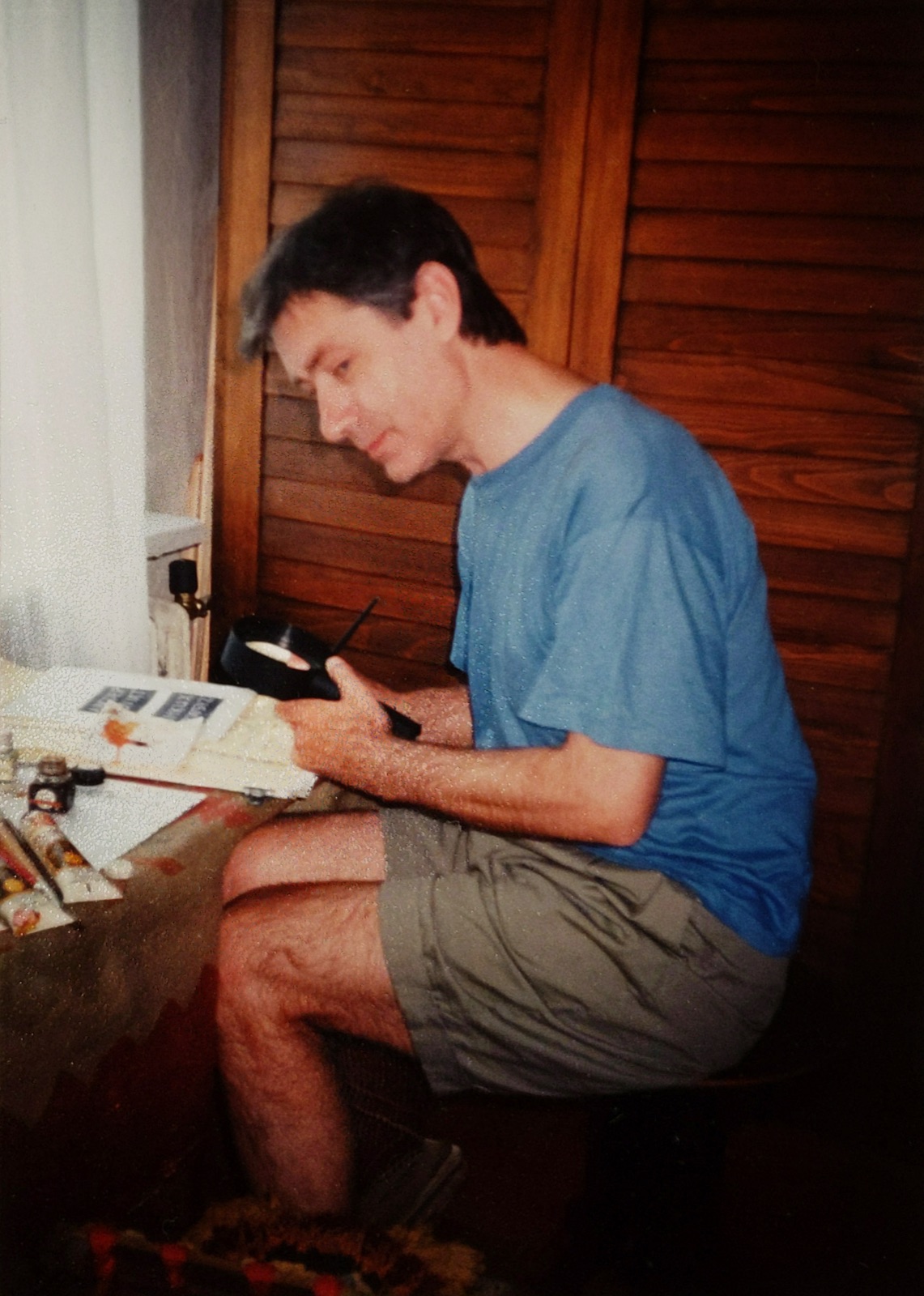
In the final chapter of his practice, Głuszyński moved decisively into abstraction, working primarily in watercolour. These were not decorative works. They were investigations — into the boundary between pigment and paper, into what happens when colour is allowed to behave according to its own logic rather than the painter's instruction. His sources were the landscapes he had known across a lifetime: the mountains of southern Poland, the light of places visited and revisited, distilled into structures that were simultaneously residue and transformation.
The influence of Expressionism is present — emotion carried by gesture, colour operating as primary vehicle of meaning — but what distinguishes the late work is its quality of earned stillness. These are the paintings of an artist who had spent six decades looking, and who had arrived at a position of sufficient confidence to let go of the image entirely. Where his early drawings were about mastery and precision, the watercolours are about release. They invite a slow, meditative encounter, and they reward it.
c. 2010 — late abstraction
Legacy
Andrzej Głuszyński died on 19 January 2018 in Kraków. He was seventy-six years old.
His work is held in private collections and in the churches and public spaces for which it was made. He operated at a considered distance from the art market — a position that was neither accidental nor incidental. What he left behind is embedded in walls, in institutions and in the visual memory of those who encountered his practice firsthand. The full scope of that practice — designer, printmaker, sacred painter, conservator, abstract colourist — resists easy summary. What connects it is a sustained enquiry into the relationship between colour, space and human experience: a question he never stopped asking, and which his work continues to pose.